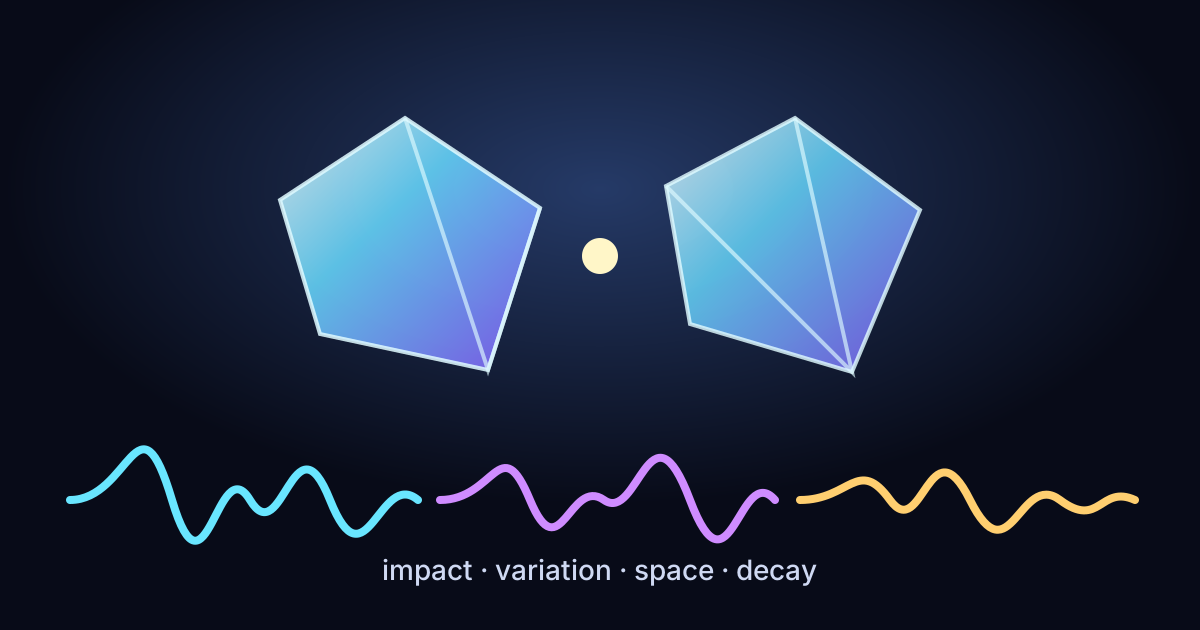
Real glass contacts never repeat perfectly: position, speed, spin, neighboring objects, and the floor all change the result. Replaying one file at one level breaks that causal link, so a moving scene begins to sound like a button triggering an effect.
The answer is not unlimited randomness. Energy, location, and material must determine the main sound first. Variation should stay small enough to be heard as another contact from the same object, not a new material. Research on impact perception and sound texture offers useful clues without proving that any mix is therapeutic.
What exists inside one impact
The first milliseconds carry the attack; resonant modes then describe size and shape; decay, rolling, and room response complete the event. Listeners use the whole pattern rather than one fixed frequency.
Material studies also show that size can shift judgments. A material profile therefore needs to respond to geometry, speed, and contact instead of owning one permanent note.
- Attack communicates contact sharpness.
- Resonance reflects geometry and elasticity.
- Decay shapes hardness and distance.
- Floor and spatial cues complete the event.
The ear notices rules across time
Sound-texture experiments found that spectral power alone was not enough for convincing synthesis; correlations and temporal statistics mattered. A collision scene likewise needs a stable distribution of strong, soft, bright, and quiet moments.
Repetition effects in auditory research show sensitivity to recurring sound objects, but they do not prove that repetition is harmful. The design lesson is narrower: avoid obvious sample loops while preserving predictable action and consequence.
Variation is not surprise
Large pitch jumps or sudden level changes remove repetition but also remove calm. Bounded differences should read as new contacts from the same gemstone.
Map energy before adding variation
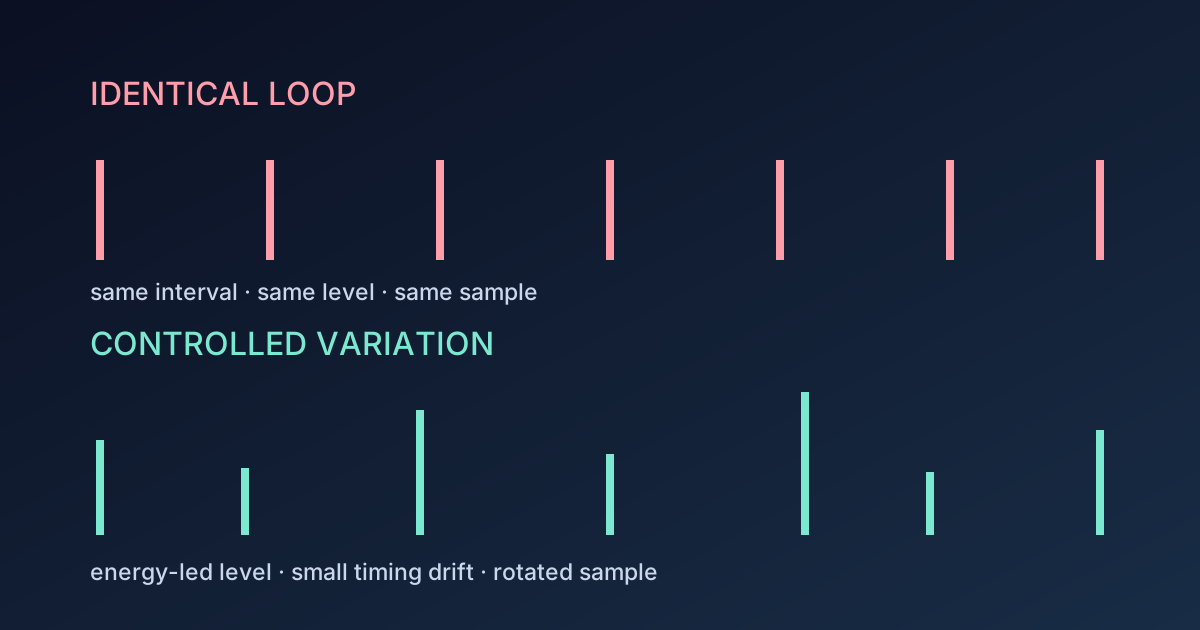
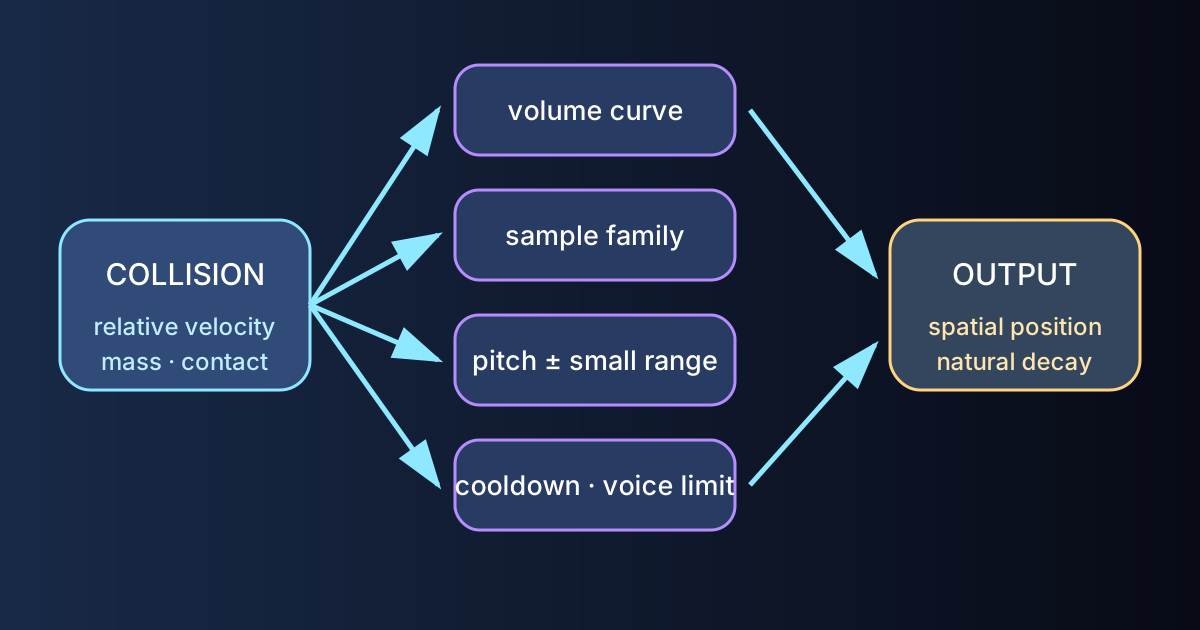
Raw velocity mapped linearly to gain makes weak contacts too loud and strong contacts clip. Apply a threshold, normalize the useful range, and use a curved response so quiet touches remain quiet while the middle range stays expressive.
Select a sample family by energy, then rotate samples and move pitch and gain only slightly. Protect the resonant identity that makes the gem sound consistent.
- Ignore contacts below a minimum threshold.
- Use a curved intensity-to-gain map.
- Choose sample families by energy.
- Keep pitch and level variation narrow.
Randomness must remain inside physics
Contact position may change brightness, speed may change attack and level, and rotation may add a brief scrape. Unrelated random values should affect only subtle sample details.
Impact-synthesis research also emphasizes time-varying spectral decay. Even a sample system benefits from distinguishing attack, resonance, and tail rather than applying one static filter.
When events crowd together, keep only the useful ones
Merge repeated contacts from the same pair within a short cooldown, cap active voices, and omit the weakest new event when the budget is full. This preserves important decays instead of producing a harsh wall of sound.
Spatial position can separate causes, but extreme panning and long reverberation are tiring. Keep distance and stereo motion inside the visible scene and leave mute and volume controls immediately available.
Three listening checks
Drop one gem three times, gather five gently, then drop twenty together. Listen for consistent identity without exact copies, quiet contacts that stay quiet, and a dense scene that settles quickly.
Preferences differ. Stop or lower the volume if the sound feels sharp or tiring. These are audio-design principles, not a medical treatment.