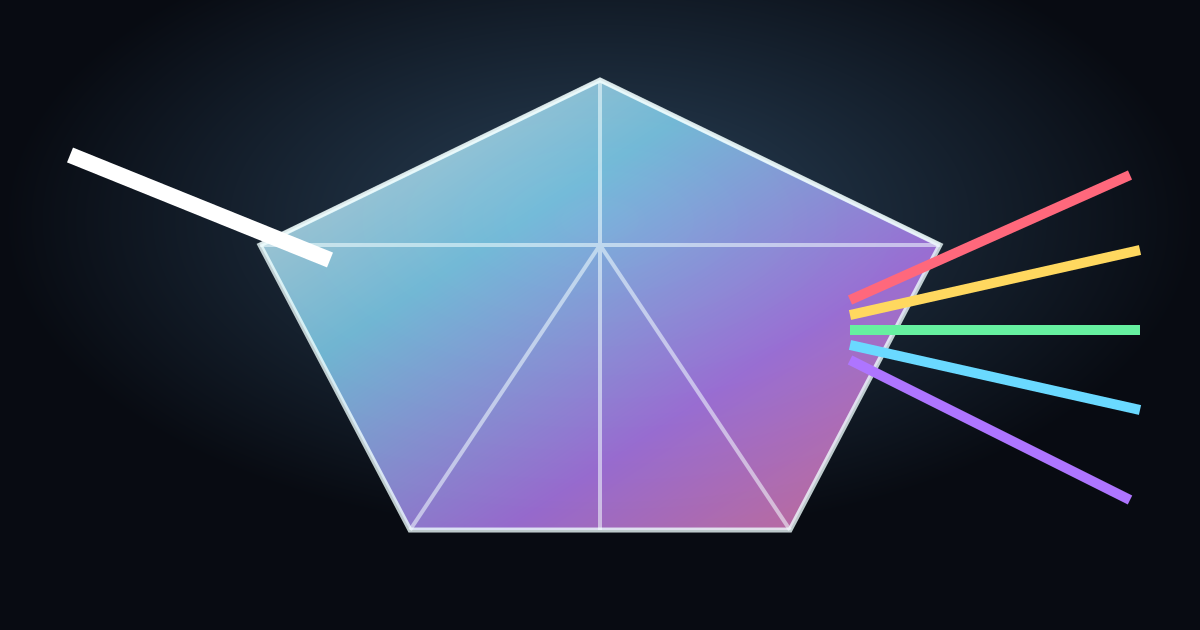
Rotate a transparent gem and a dark facet can flash white while a neighbor splits into blue or orange. The material did not suddenly change color; the path linking light, cut, and viewer changed.
Gemology separates brightness, fire, and scintillation. They depend on connected proportions, symmetry, lighting, and viewpoint—not one refractive-index slider. This article explains the cues a browser scene can preserve without claiming to reproduce professional grading.
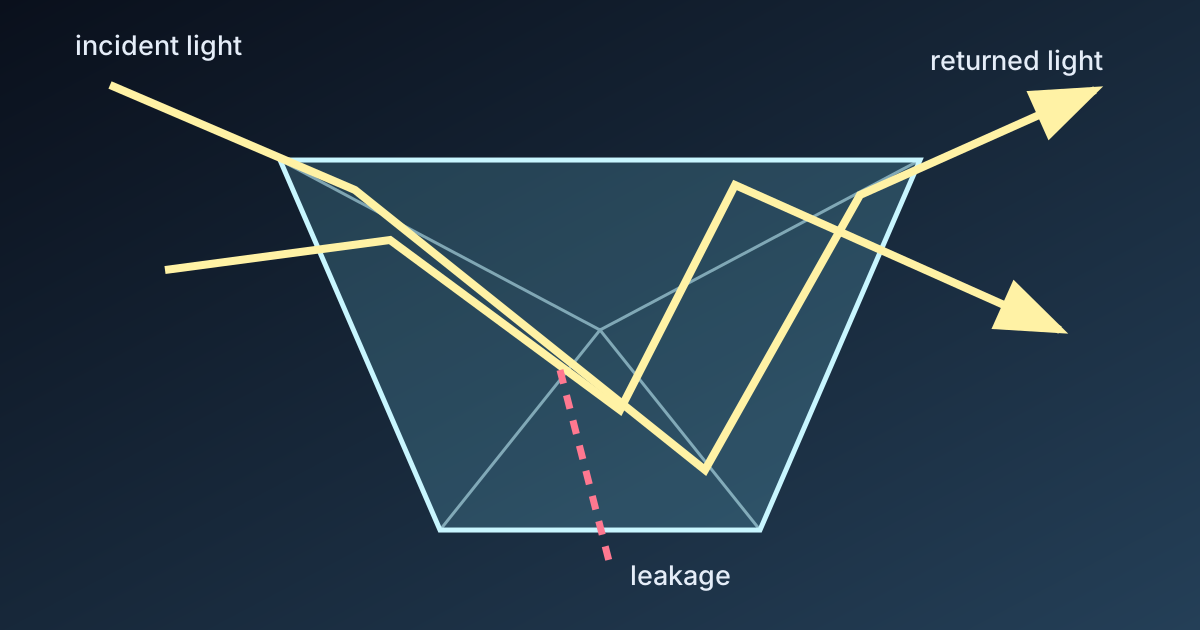
Light bends once at the surface and turns repeatedly inside
Refraction bends light at the air-gem boundary. Above a material-dependent internal angle, total internal reflection can return light toward the crown; other paths leak through the side or pavilion.
A large soft source produces broad calm reflections, while a small source creates narrow flashes and stronger fire. An environment map and a key light therefore serve different roles.
- Refraction changes direction at the boundary.
- Internal reflection can return light upward.
- Proportions control return and leakage.
- Source size controls the facet pattern.
Fire begins with wavelength-dependent refraction
Transparent materials usually bend wavelengths by slightly different amounts. The separated paths can exit as colored flashes when facets and viewpoint align.
GIA modeling tested more than 26,000 round-brilliant proportion combinations. Proportions maximizing colored return did not always maximize white return, although balanced combinations existed.
A rainbow material is not physical dispersion
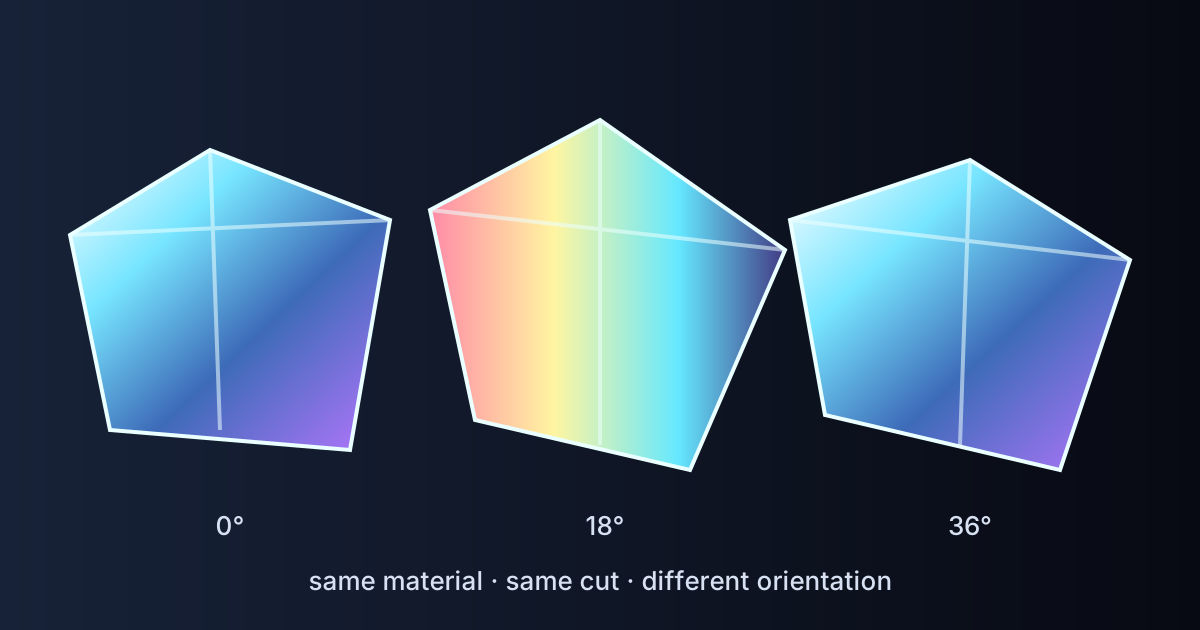
A painted gradient stays attached to the surface. Optical fire should move when the relationship among source, facets, and viewer changes.
Facets form connected paths, not isolated mirrors
Crown facets manage entry and exit, the pavilion strongly affects return or leakage, and the table acts as a broad window. More polygons alone do not create a better gem.
Repeatable facet structure and clean normals create rhythmic light-dark changes. Arbitrary triangles scatter highlights like noise and make the object look unfinished.
- Crown: entry and exit
- Pavilion: return and leakage
- Table: viewing window
- Symmetry: moving light rhythm
Why a few degrees reverse the pattern
A facet is bright only when its orientation sends source light toward the camera. Rotation removes one facet from that relationship and brings another in, producing scintillation.
Uniform brightness removes depth, but a black environment can block the whole interior. Soft environment light, a clear key, a rim, and a mid-gray floor preserve readable contrast.
A browser rendering checklist
Treat index of refraction, transmission, thickness, roughness, and absorption separately. Plain alpha transparency creates sorting artifacts and an empty shell; distance-based absorption gives thicker regions natural color.
True dispersion is expensive. High quality can sample wavelength differences, while mobile can use restrained fringes and shared environment reflections. The effect must still move with the gem.
- Model thickness and absorption.
- Separate environment, key, and rim light.
- Move highlights with rotation.
- Spend quality on large or selected gems.
- Reuse environment resources.
How to observe the effect in Gem ASMR
Hold the camera still and rotate one gem slowly. Track broad white return first, then smaller colored flashes. Compare a gray studio and a dark studio before changing the cut.
The screen is not a professional grading instrument. Display, browser, and quality tier alter the result; the goal is to observe light paths as a slow visual ASMR activity.