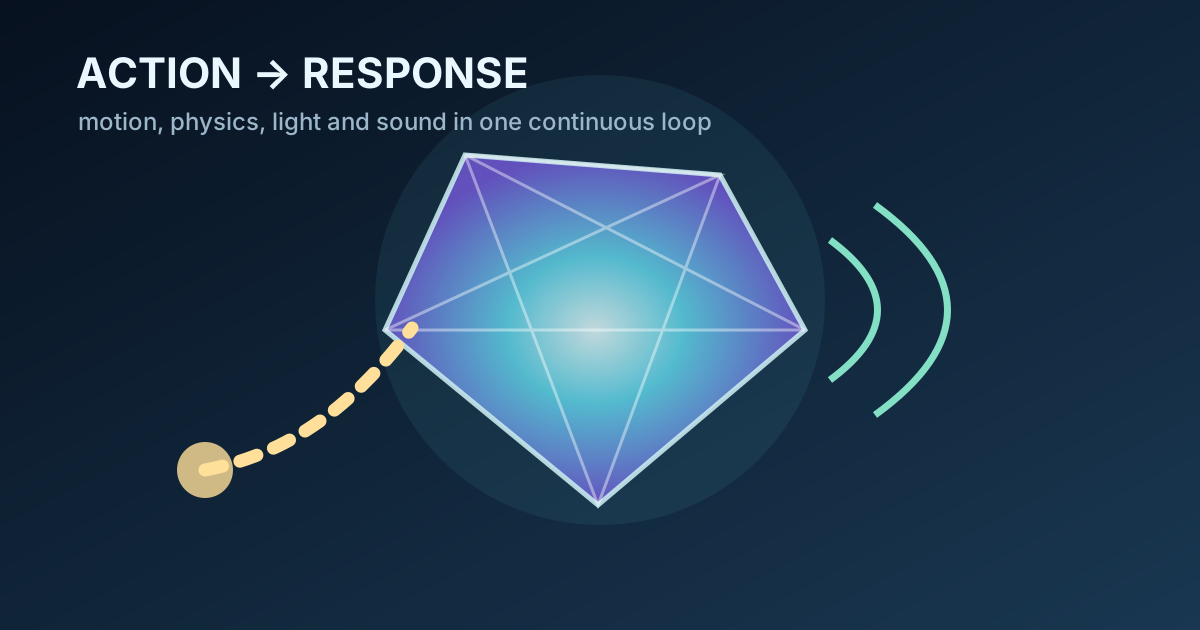
A recorded clip and an interactive scene can deliver similar sounds yet feel different. In the interactive scene, your movement determines which stone moves, where it collides, and when the sound begins. Motion, light, and audio become evidence that one action caused one event.
Research on sense of agency studies how action selection, prediction, and sensory feedback contribute to the experience of control. It does not prove that interactive ASMR treats stress or works identically for everyone, but it gives useful language for designing coherent feedback.
What direct control adds
Playback has a fixed order. Direct control lets a person choose a slow placement, a quick push, or a stack, then compare the result with the intention.
Clear selection and consistent pointer mapping matter before decorative effects. If the wrong stone moves, the action-effect chain breaks even when animation is smooth.
- Clear target
- Consistent direction
- Synchronized contact
- Distinct place and throw behavior
Why action-effect timing matters
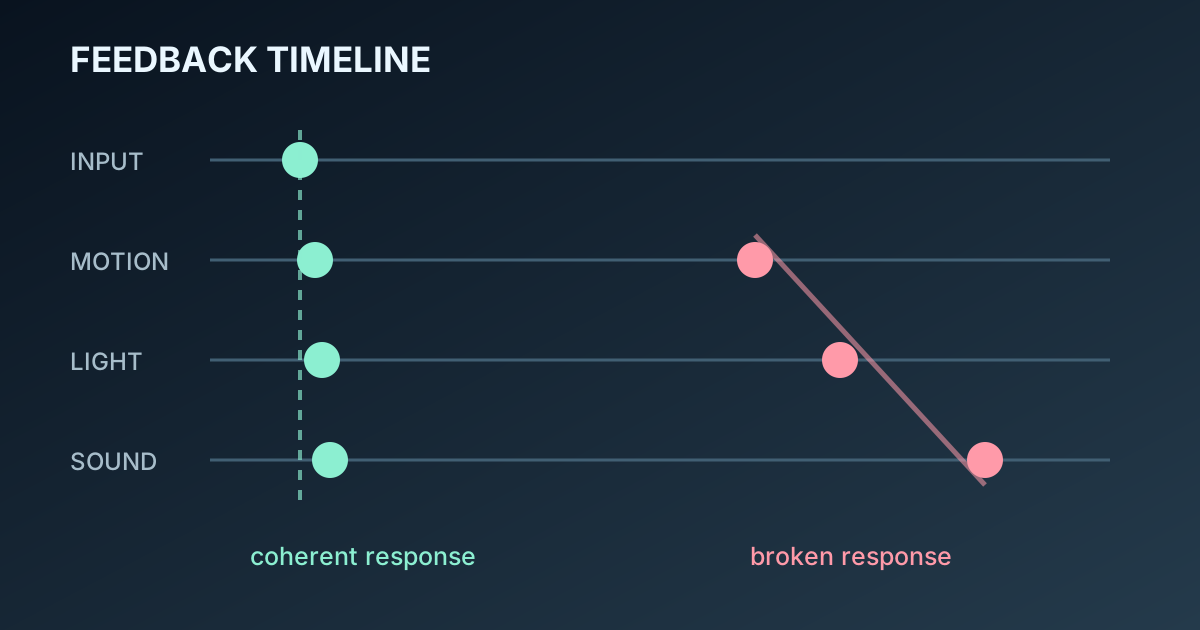
Delayed cursor feedback can weaken the feeling that an on-screen result belongs to the current movement. Stable timing matters as much as average speed because jitter continually changes the rule.
Audio has its own path through context unlock, buffers, collision events, and output. Prepared sounds triggered by actual contacts avoid both premature and late effects.
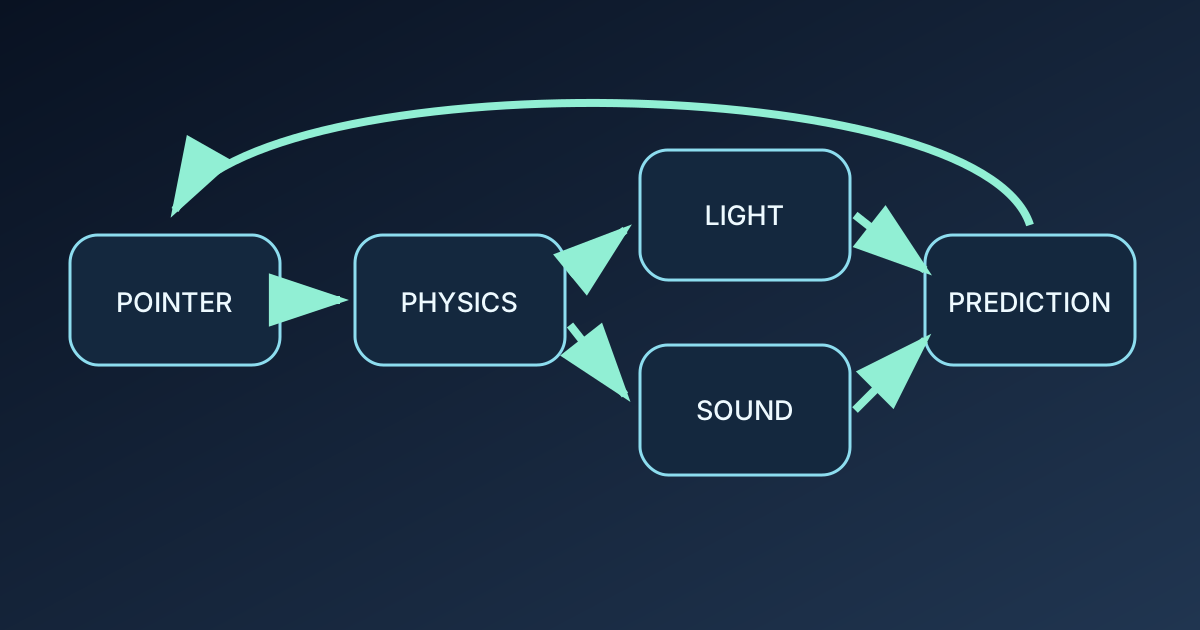
Physics, light, and sound tell one story
Collision energy should guide motion, rotation, a restrained highlight, and sound intensity. A loud ring without movement or a flash from a soft touch creates conflicting evidence.
Spatial sound should follow the visible source. It can remain subtle on headphones and still preserve distance and overall level on mobile speakers.
Immediate does not mean loud
A tiny highlight or quiet tick can confirm an action when it appears without delay at the correct location.
Predictable is not identical
The rule connecting speed to impact should stay stable, while small sample and pitch differences can reflect changing contact surfaces.
Physics defines the range; variation fills its texture. Voice limits protect important impacts when many stones collide.
Choice also means accessibility
Large touch targets, keyboard alternatives, reduced motion, and truthful mute state let more people control the same experience.
Audio begins with an explicit gesture and can always be stopped. This preserves control instead of surprising the listener.
- Touch and keyboard
- Visible mute state
- Reduced motion
- No autoplay
- Consistent devices
Observe the difference in Gem ASMR
Place one stone gently, then push it sideways and compare rotation, impact level, and location. Next, start a chain reaction and notice how visible density becomes sound density.
This is not a health test. Lower the level or stop when uncomfortable, and choose passive listening or silence whenever it feels better.