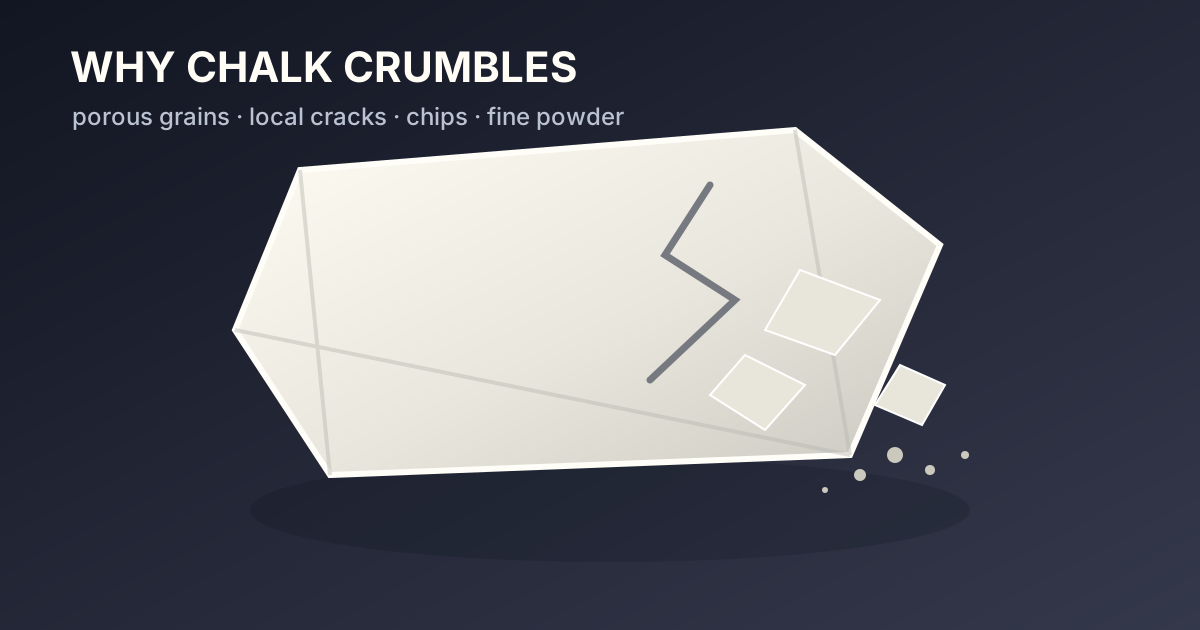
Glass can transmit a fast crack through a coherent solid. Chalk more often dents, sheds a chip, and releases fine powder. The contrast begins inside the material: chalk behaves as a porous assembly of particles and bonds rather than one uniform crystal.
Geological chalk and manufactured writing chalk are not identical, so one composition or porosity value should not be applied to every product. The shared mechanical ideas—particles, voids, uneven bonds, friction, and compaction—still explain what a convincing chalk interaction must show and sound like.
One block, many particles
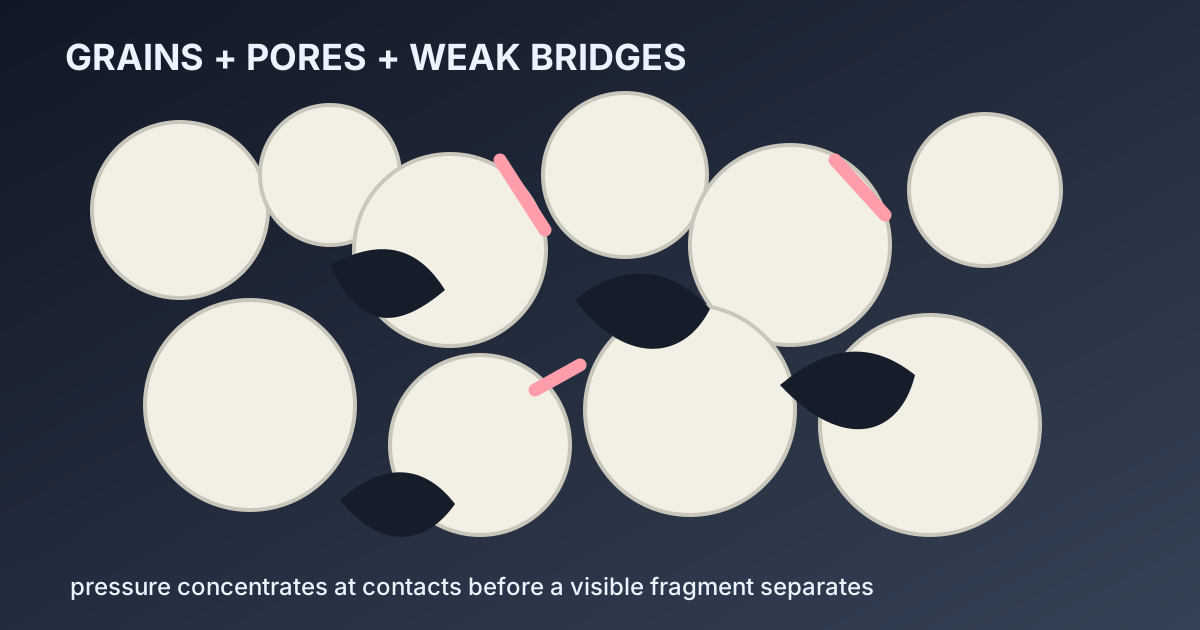
At normal scale chalk looks solid. At smaller scales grains, pores, and cemented contacts distribute load unevenly. Weak contacts break first, while nearby grains compress or slide.
A digital surface therefore needs restrained roughness and diffuse highlights before it breaks. A plain white polygon cannot communicate the dry, soft-looking material that viewers expect.
- Stable large silhouette
- Subtle porous shading
- Mixed fragment sizes
Pressure spreads from the contact point
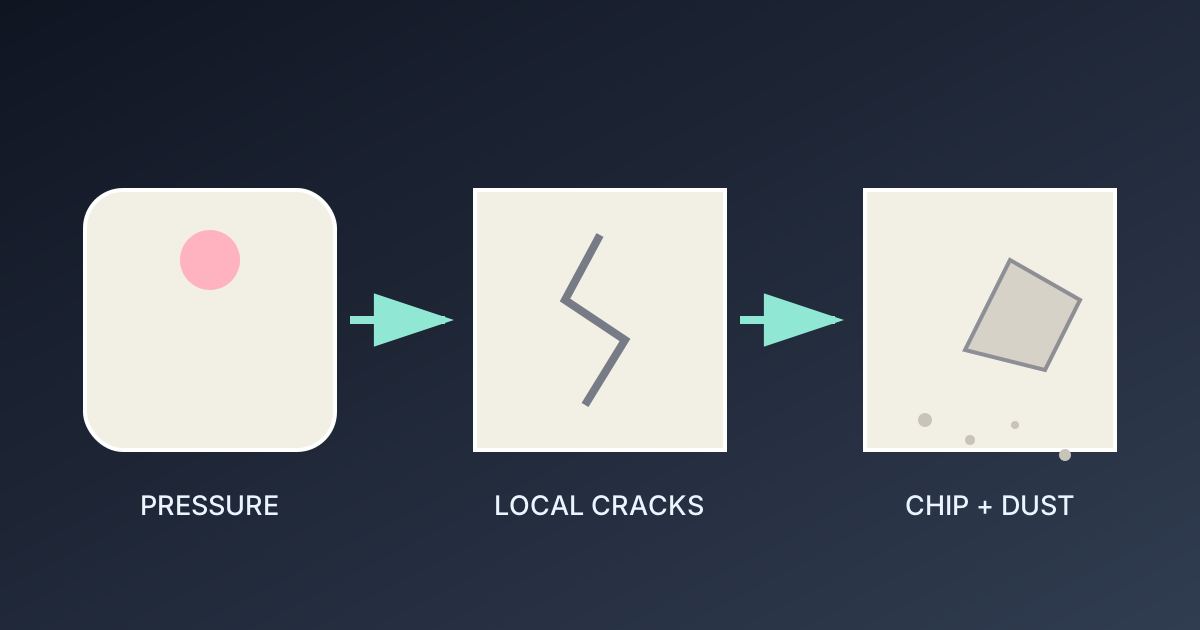
A center press can distribute load in several directions; an edge press has less material around it and can release a chip sooner. Existing damage and distance to the boundary should influence each result.
Natural cracks are not identical circles or stars. Constrained variation keeps damage near the input, connects it to prior weak regions, and prevents artifacts outside the chalk silhouette.
Why chips and powder appear together
A crack reaching a boundary separates a visible chip. Friction and crushing along that crack produce smaller crumbs and dust at the same time.
Most dust should begin near the contact and newly exposed edge. Only larger failures justify a thin release from a wider boundary. A particle budget and short lifetimes preserve immediate response on mobile.
- Chips explain shape change
- Crumbs break repetition
- Dust follows contact
- Performance caps remain fixed
Why chalk should not sound like glass
Glass favors a sharper onset and clearer ringing components. Chalk disperses energy through many small bond failures and friction, producing shorter, drier, softer events.
Variation should come from several recordings grouped by light touch, medium break, and final collapse—not extreme random pitch. Voice limits and short decays prevent repeated clicks from becoming loud clutter.
Rules for believable browser chalk
Show the nearest deformation and crumbs immediately, then let lighter dust follow. Align the sound onset with the first visible change.
Use contact location, thickness, boundary distance, and accumulated damage to constrain patterns. Keep the body fixed until a part truly separates, and avoid launching every final fragment in one direction.
- Immediate feedback
- Contained damage masks
- Non-repeating distributions
- Bounded dust lifetime
- Separate sound groups
Observe it in Gem ASMR
Try a light press near the center and then near an edge in Chalk ASMR. Watch where dust begins and listen for variation without artificial repetition.
Begin at a low listening level. Gem ASMR is a relaxation and sensory experience, not a medical treatment. Stop or lower the volume whenever a sound feels uncomfortable.