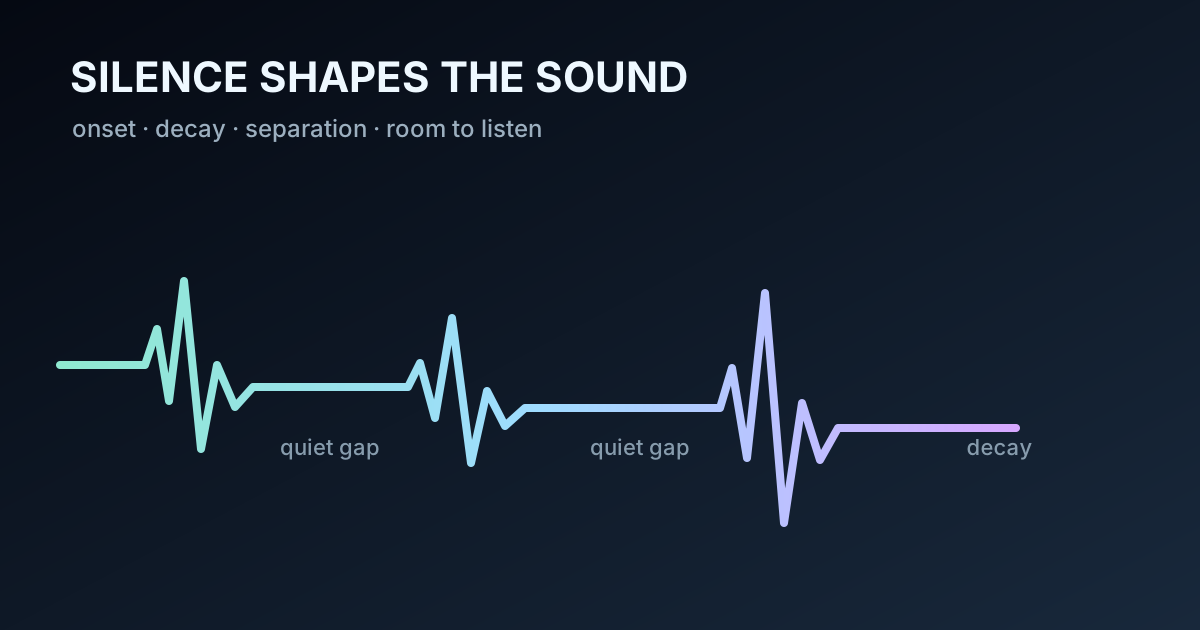
Fifty gems do not automatically create fifty times more detail. Large impacts can hide tiny contacts until location and material become difficult to recognize. A short reduction in sound gives each onset and decay a readable boundary.
Silence here does not require a perfectly zero digital signal. Quiet friction or a room tail may remain. What matters is relative space in which the ear can separate one event from the next.
Boundaries turn sound into events
An impact has an onset, peak, and decay. If another peak arrives too early, the first ending disappears and both become continuous noise.
Audio envelopes should follow physical motion. A good mix is not a complete event log; it preserves perceptible causes and endings.
Masking hides small sounds
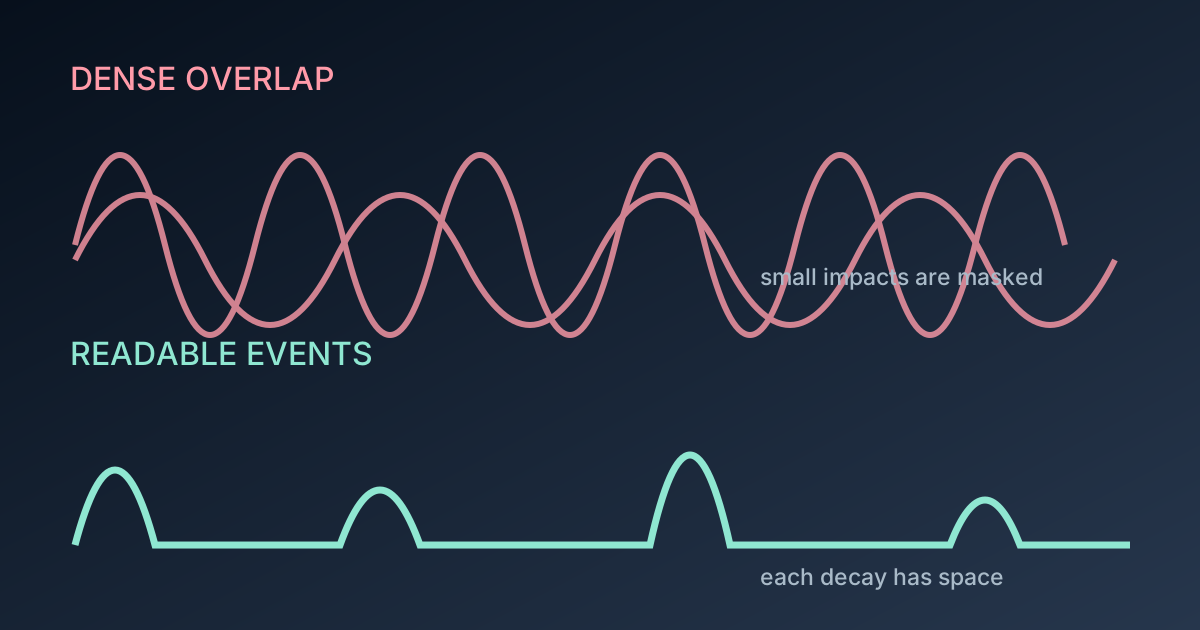
Auditory masking occurs when one sound makes another harder to hear. Forward masking can also affect a softer sound that follows a stronger one; its extent depends on level, frequency, duration, and context.
After a large floor impact, raising every tiny roll only increases fatigue. Shorten an excessive tail and merge or omit low-priority contacts first.
- Do not boost every quiet event
- Group nearby micro-contacts
- Protect decay from endless peaks
- Use context rather than one fixed gap
Silence is not a jump-scare tool
Contrast can make the next sound clearer without increasing its real peak. Quiet space should restore detail, not prepare an exaggerated shock.
A faint room tail can prevent a broken-audio impression, but fast master-gain pumping creates another artificial distraction.
What survives a crowded collision
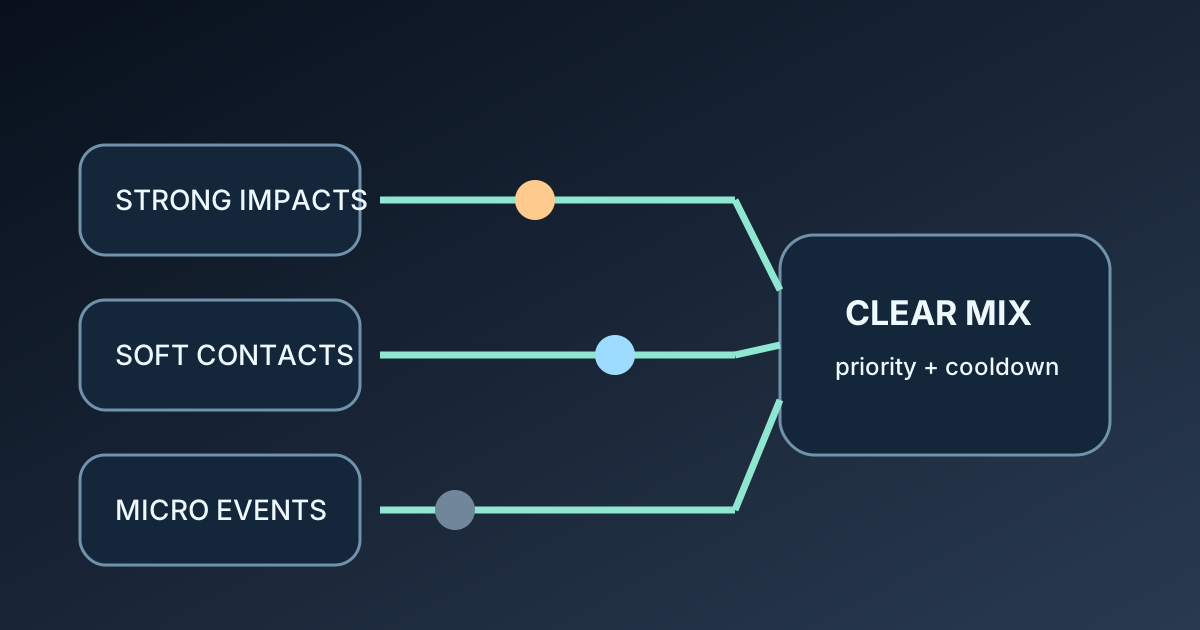
Prioritize energy, novelty, and spatial difference. Apply cooldown to the same pair, retain separated locations, and compare a new strong event with weak voices already playing.
Many rolling contacts may become one short texture, while the first solo floor impact stays independent.
- Energy priority
- Pair cooldown
- Spatial separation
- Smallest voice removed first
- Continuous contacts aggregated
Spatial audio also needs temporal room
Accurate panning cannot separate everything when all sources speak at once. Distance attenuation and time gaps help direction remain intelligible.
Headphones and phone speakers reveal different detail. A narrow mobile output requires level hierarchy as well as position.
Compare quiet space in Gem ASMR
Drop one gem, then five and ten, and notice when tiny events stop being distinct. Moving a gathered pile reveals the difference between a major fall and continuous contacts.
Listen at a comfortable level. This is not a hearing or sleep diagnostic, and ASMR responses vary by person and environment.