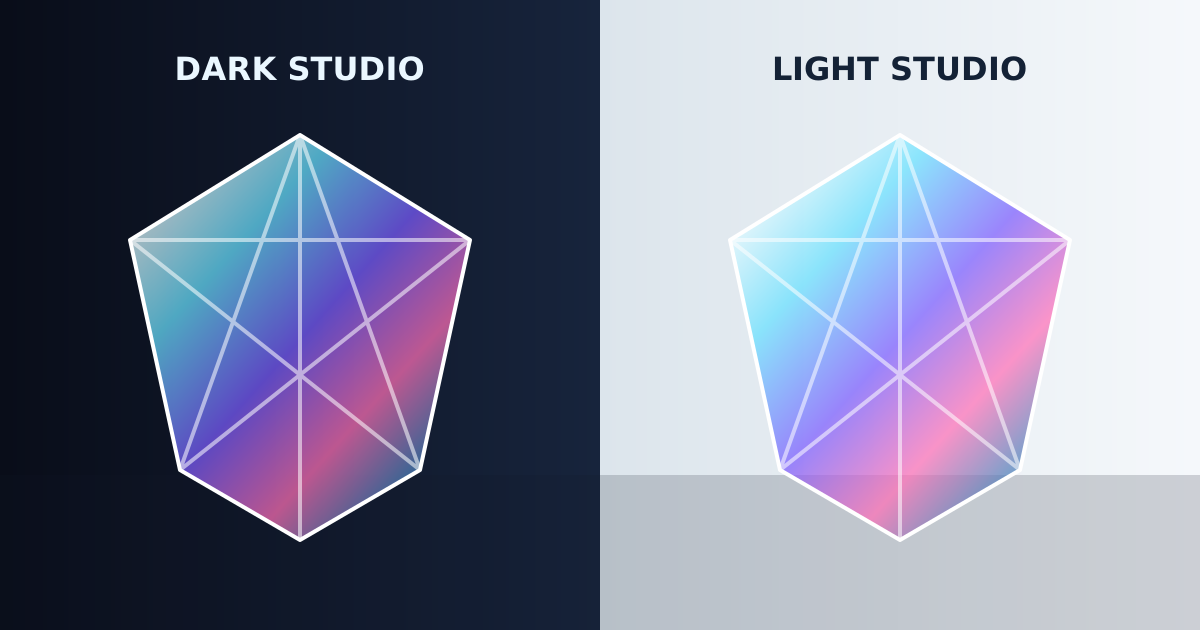
A transparent gem may look deep and dark on black, then bright and clear on gray. It does not show only a fixed surface color: light reflects, refracts, travels through volume, and returns carrying information from the scene.
A browser cannot trace every real light path, but it can preserve the cues that matter most: silhouette, angle-dependent reflection, changing facets, thickness color, and a stable display transform.
Transparency is not just lower opacity
Alpha blending mixes foreground and background, but a gemstone both transmits and reflects light. Three.js transmission models that distinction while keeping reflection visible.
Angle-dependent reflection gives edges form. Too little loses the silhouette; too much creates a pasted white outline.
- Alpha blend
- Transmission
- Reflection
- Angle dependence
Refraction folds the background into the gem
Each facet has a different normal, so it samples the environment from another direction. Those moving bands make rotation readable.
IOR, model scale, cut angle, and camera must be tuned together. Excess bends the scene into noise; too little removes depth.
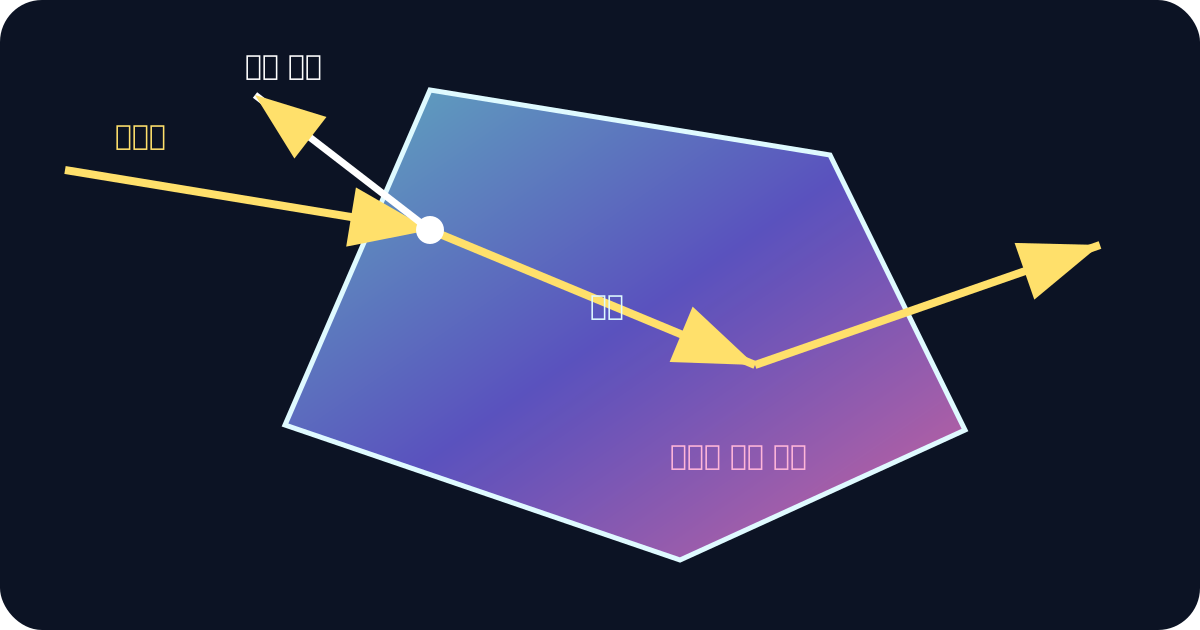
Thickness creates color density
Khronos volume materials use thickness and attenuation to represent light traveling through colored volume. Longer paths can look more saturated than thin edges.
Absorption should preserve color rather than act as a black shadow. Smooth interpolation also keeps multicolor gems from looking painted.
- Clear thin paths
- Denser thick paths
- Surface reflections
- Facet-dependent environment
Why a gem disappears on black
A dark floor and background provide little bright information to refract. Raising emissive brightness makes the gem glow instead of restoring glass.
Soft overhead light, a restrained rim, and a matte gray floor supply readable contrast without washing out the studio.
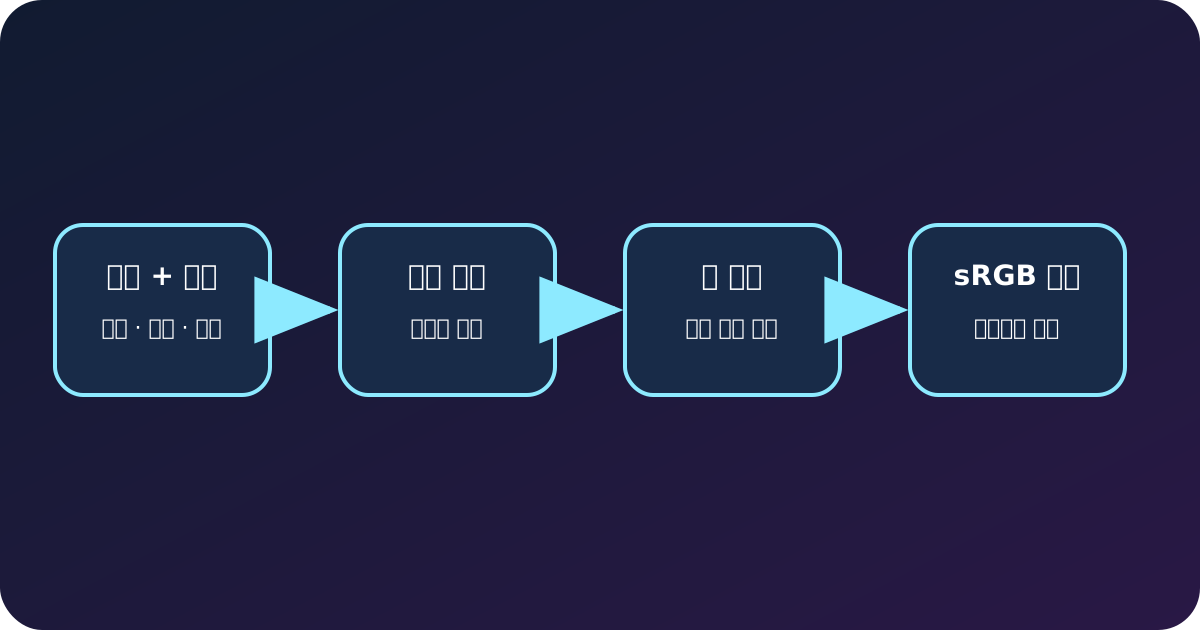
Color space and tone mapping can reverse brightness
Lighting belongs in a linear working space, while display output needs the correct conversion. A broken color-space chain can make a scene dark or blown out.
Tone mapping compresses bright highlights. Exposure must retain sparkle while leaving midtone facets separable, with the conversion applied exactly once.
- Tagged inputs
- Linear lighting
- Tone mapping
- sRGB output
Compare it in Gem ASMR
Keep one gem and switch between matte black, gray, and light gray floors. Then change only environment brightness or reflection intensity.
Rotate slowly and watch highlights remain related to the environment rather than painted onto the object. This visual exercise is not a gemstone appraisal method.