Some people find fast or repetitive sound engaging; others become more distracted. Personal preference matters, but ASMR does not diagnose or treat ADHD.
The stronger evidence concerns white and pink noise, not ASMR. A 2024 meta-analysis found a small average task benefit in youth with ADHD or elevated attention problems and a small negative effect in comparison groups.
These sounds are not interchangeable
White and pink noise are continuous spectra. ASMR contains meaningful, changing whispers, taps, impacts, or visual attention that may capture the task’s focus.
Classify speech, peaks, predictability, and screen demand instead of choosing a universal ADHD sound.
- White noise
- Pink noise
- ASMR events
- Task-specific response
A small group average is not certainty
The meta-analysis covered limited laboratory and academic tasks in children and young adults. It does not establish long-term benefit, every adult response, or ASMR efficacy.
A negative average in non-ADHD groups also shows that more sound is not always better.
Run a one-variable personal comparison
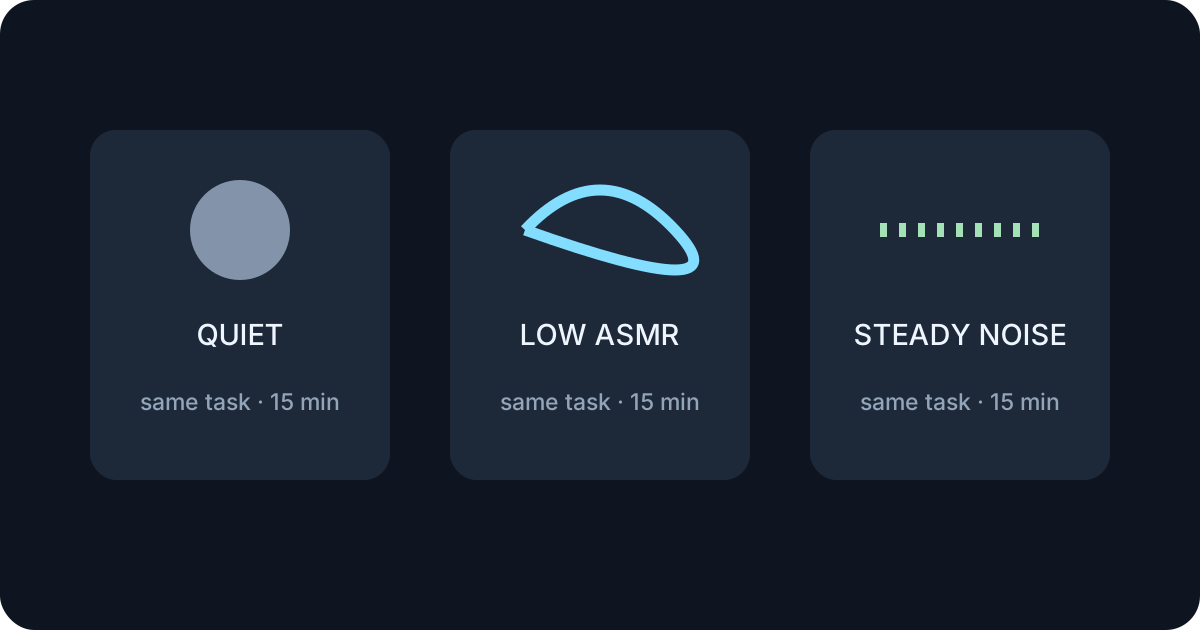
Compare equal fifteen-minute tasks in quiet, low ASMR, and low steady noise while keeping location and notifications similar.
Record completed units, switches away, fatigue, and discomfort. Repeat before drawing a conclusion.
- Same task
- One sound condition
- Simple outcomes
- Several sessions
Make the task smaller first
Turn a broad assignment into the first visible action and use a short timer. Sound should support that structure, not become another activity.
Keep interactive play separate from work and include quiet breaks for ears and eyes.
Keep evidence-based care separate
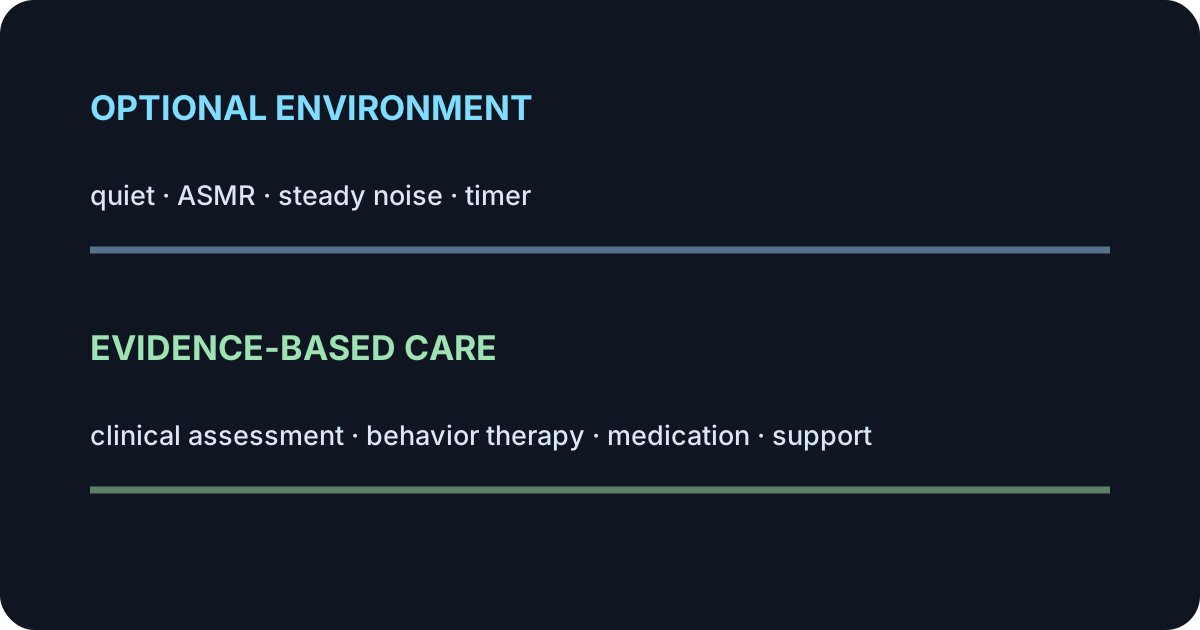
CDC guidance includes behavioral treatment, medication, monitoring, and age-appropriate school or family support. Do not replace or change them because of ASMR.
Children should not be forced to wear headphones or tolerate disliked triggers.
Know when to stop or seek help
Stop if stronger stimulation, content browsing, hearing fatigue, or dependence interferes with the task.
Persistent impairment deserves professional assessment; urgent safety or self-harm concerns require local emergency support.