
Try writing down the sound of a dry leaf being squeezed. Crunch seems right until you notice the smaller sounds around it. Then crackle fits, followed by rustle. One movement contains several events, and the loudest one is not necessarily the part you want to hear again.
This is a listening guide, not an argument that everyone should enjoy dry leaves. A texture that feels comforting to one listener can sound like irritating plastic to another. The useful question is where that difference begins. You can explore it in the leaf mode, or simply read first. There is no sensation you are required to produce.
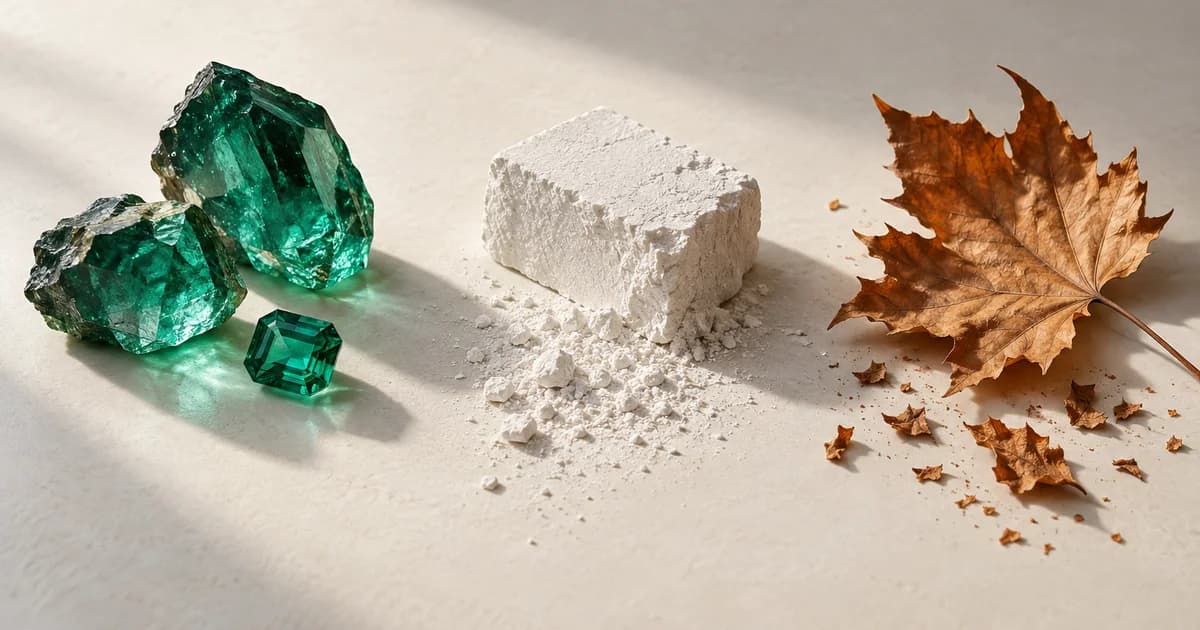
AI-created editorial illustration, not a gameplay screenshot or an experimental photograph.
Before the obvious break
Listen near the beginning of a recording. There may be small movements before the prominent crackle: a curled edge shifting, surfaces brushing, a fold changing direction. Those quiet details give the stronger sound somewhere to arrive. Remove the lead-in and an otherwise pleasing break can feel abrupt. This does not mean every onset must be slow. A quick squeeze can be satisfying when the movement makes sense alongside the sound.
In an interactive scene, timing also helps you understand what happened. A loud break before the leaf moves draws attention to playback rather than material. So does a sound that arrives well after the visible fold. Listen with the scene at first, rather than judging the recording as an isolated burst.
Crunch is not simply louder rustle
Crunch often describes an event with a clear boundary. Rustle suggests small events joined by quieter friction. These are useful listening words, not standardized acoustic categories. Another person may choose different words for the same passage. Notice whether you enjoy the distinct attack, the busy middle, or the fine movement after it.
Turning the volume up does not always reveal more. A prominent attack can become uncomfortable before the subtle tail becomes interesting. Try one leaf at a time instead. Begin quietly on whatever equipment you already use; you do not need to buy a particular headset to listen attentively.

The outline is not a species-specific recording
Real dry leaves differ in their veins, curled edges, existing folds and condition. Where pressure first lands changes which surfaces meet next. Gem ASMR borrows the idea of a folding leaf but gives it jewel-like color. A red virtual leaf does not promise a recording from a particular tree. Color and shape are visual choices, while the audio uses recorded dry-leaf passages. The combination is imaginative, not a botanical or mineral simulation.
A short action can still have a middle
Press a leaf and watch its edges move inward. A brief press gives a different gesture from holding and then releasing. On release, the remaining shape gives way to fragments. Enter can choose an available leaf for you; hold the key, then let it go. A hold is bounded rather than an endless loop, so keeping the key down does not create an unlimited stream of sound. Let the action finish before starting another.

Keep the small ending
After the main crackle, finer sounds may suggest thin pieces brushing or settling. They give the movement somewhere to end. You do not have to time this pause precisely. Waiting for the very last sound can become an unwanted listening task. If you enjoy only the first brief crunch, that is a valid preference too. The point is to leave room to notice the ending, not to pass a test of attention.
Recorded variation is finite
The leaf mode has a collection of prepared recordings. Their order and small playback variations help avoid an immediately mechanical sequence, but they cannot make every passage new forever. Familiarity is not a malfunction. If repetition begins to bother you, try a different hold length or stop for a while. Pressing faster to chase novelty can make familiar details stand out even more.
Give the texture your own name
A comparison with folded paper, dry needles or a thin wrapper may be more useful than an unfamiliar technical term. Separate the part that bothered you: was the entrance startling, the middle scratchy, or the duration simply too long? You may discover that you dislike one part rather than every leaf sound. If analyzing it feels like work, choose another sound. Listening need not become a project.
What the research does not establish
Barratt and Davis's 2015 survey reported crisp sounds and slow movements among ASMR triggers described by respondents. Poerio and colleagues' 2018 research examined responses to videos. Neither establishes an effect of this leaf mode, a particular recording, or jewel-colored leaves. They offer background on ASMR experience, not proof that this interaction changes your brainwaves or treats a condition. Enjoyment without tingles is enough; dislike is allowed too.
One look, then one listen
For one leaf, follow the edge and the shrinking open surface. For the next, leave your gaze relatively still and notice the beginning and end of the sound. Keep a comfortable volume and compare a short press with a longer one. You do not need an exact memory of both. A small observation, such as preferring the softer ending, is enough to guide the next choice.