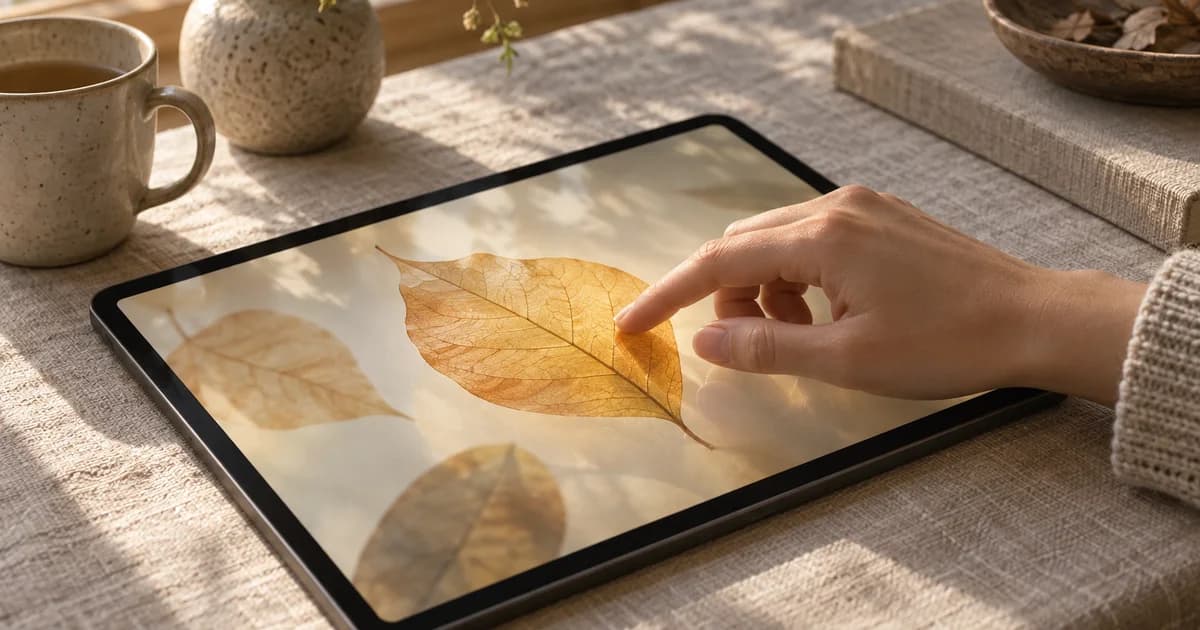
An ASMR video sometimes passes through a moment you wish would last a little longer. A hand hovers, a thin surface folds, a small piece settles, and then the sequence moves on. Rewinding returns the image, but not quite the same flow. Interactive ASMR offers a different arrangement: you decide when the next action begins.
That is not automatically better. Some days making a choice feels pleasant; other days it is precisely what you want to stop doing. Videos and interactive scenes solve different needs. Comparing them is more useful than declaring one the future of the other.
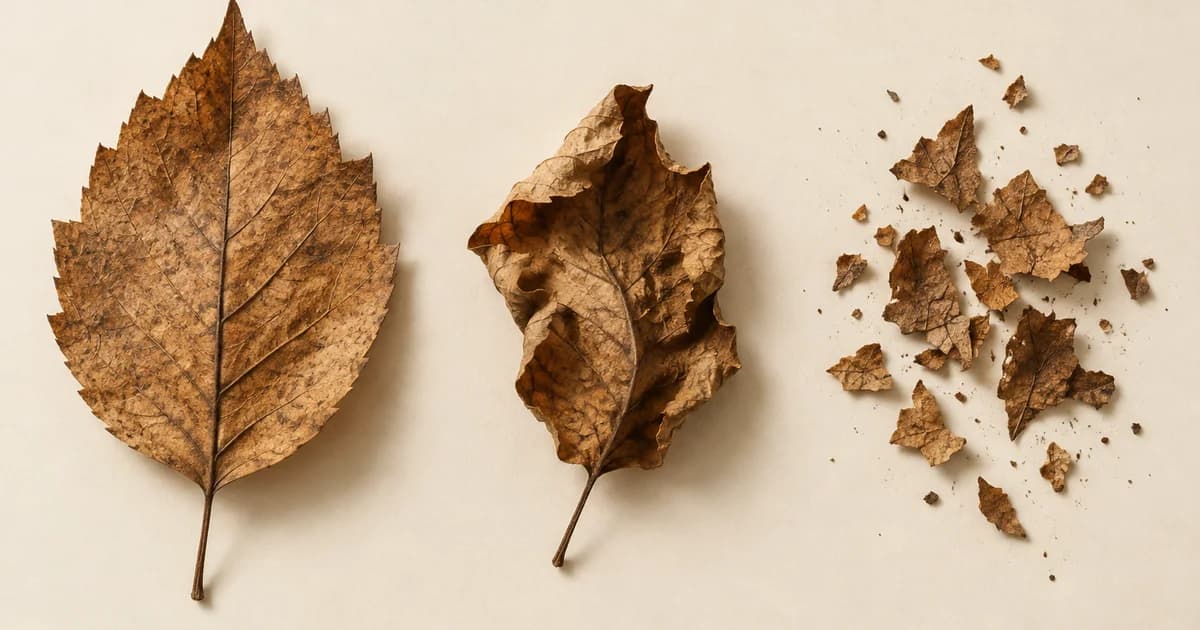
AI-created editorial illustration, not a gameplay screenshot or an experimental photograph.
A video gives you someone else's pace
A thoughtful ASMR video contains more than objects and recordings. The movement between objects, the time spent waiting, and the way a person handles a delicate surface are part of it. You can follow without deciding what should happen next. Looking away does not interrupt the sequence. If attentive human gestures are central to your enjoyment, surrendering control may be the attraction rather than a limitation.
After a day of decisions, even choosing one leaf may feel unnecessary. Finding an interactive mode less restful does not mean you have misunderstood it. Rest does not require exercising every available choice.
Holding changes the waiting
When you press a leaf, you are not only waiting for someone to release it. You decide when to let go. You may watch the shape fold a little longer, or end the gesture once you have heard enough. That changes your relationship to the scene without needing a claim about superior relaxation. It is a product observation, not evidence that personal control causes a particular biological benefit.

Let the interface choose one small thing
Six leaves offer a pleasant choice, but choosing on every turn can become tiresome. Enter selects an available leaf at random. You still choose the start and end, while the interface chooses the object. For a particular leaf, use the pointer or focus its numbered button and hold Space. The page shortcut does not override ordinary form fields or other buttons. A surprise sound while submitting a form would be interference, not useful agency.
A finger is involved, but the material is virtual
Touch creates a direct-looking connection between your hand and the object. It does not give your skin the texture of a dry leaf. The actual surface remains smooth glass. Think of this as linking a comfortable movement with sound and imagery, rather than a promise of physical material feedback.
That movement can also become tiring. Rest the device somewhere comfortable instead of stretching a thumb across the screen. If your wrist or finger hurts, change the input or stop. Choosing a video so your hands can rest is not a step backward.
Familiar rules, different details
Repeating a video returns a fixed sequence. Repeating an interaction returns a related action: the direction of a Gem, the length of a hold or the sounds already fading can differ. Yet total unpredictability would be tiring. A leaf should still fold when pressed and crumble when released. Variation is easier to enjoy when the broad relationship remains understandable. Novelty and reliability have different jobs.
Compare preferences, not minutes spent
Watch a short part of a video you like, then try one interactive mode at a comfortable volume. Ask what you enjoyed in each: the sound itself, someone else's careful handling, or choosing when to finish. Do not treat time spent as a score. Staying longer may mean curiosity rather than comfort. A concrete observation, such as finding repeated choices distracting, is more useful than declaring a winner for everyone.
Your own hand adds a timing reference
In a video, the recorded hand and the sound flow together. When you act, your own gesture becomes another reference. A delayed response makes you check whether the click worked. Attention shifts from the leaf to the interface. Clear feedback matters because you should not need to press repeatedly out of uncertainty.
On first use, browser audio activation or loading may require a moment. Do not raise the volume sharply because the first gesture was silent. Check sound controls and the device's mute setting. Playback trouble is different from not experiencing ASMR. Once things respond normally, a light touch is enough: pressing the screen harder is not the same as holding for longer.

A video study is not a test of this mode
The studies linked below provide background, not a head-to-head comparison of Gem ASMR and videos. Poerio and colleagues studied video responses; Barratt and Davis examined reported ASMR experiences and triggers. Neither supports a claim that this leaf interaction is more effective, treats sleep problems, or guarantees calm. The feature can be worthwhile as enjoyable sound play without making those promises.
Choose what your hand will do
Playground lets you set Gems moving and observe the contacts that follow. Cutting emphasizes choosing a line through an object. Chalk invites attention to a changing surface. Leaves revolve around holding and letting go. Start with one gesture rather than adjusting every setting. You do not have to complete every mode just because the menu offers them. Alternatives are places to return to, not unfinished tasks.