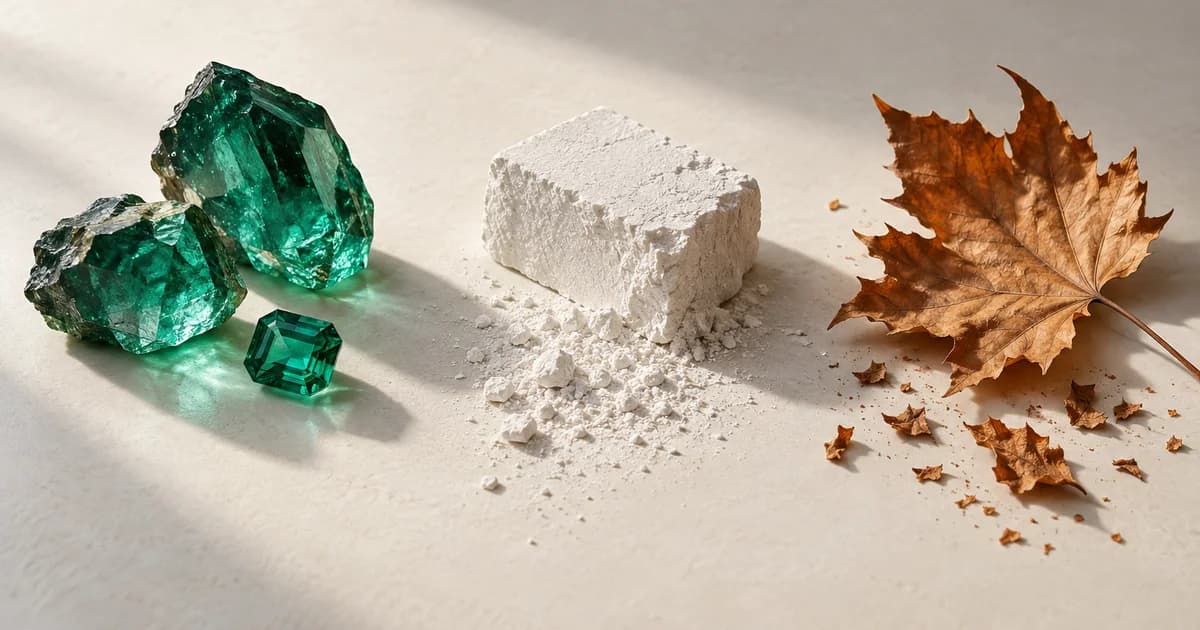
Put a crystal fragment, chalk powder and a broken leaf beside one another. Breaking suddenly becomes a very broad word. The crystal remains a small object. Chalk loses its clear boundary into powder. A leaf folds its thin surface before scattering. What remains changes how you wait for the ending.
You do not have to like all three. A jewel's reflection may appeal while its distinct contact sound does not. Chalk may be your favorite image and leaves your favorite recording. This guide separates those preferences rather than choosing a winning material.
AI-created editorial illustration, not a gameplay screenshot or an experimental photograph.
The intact surface makes the first promise
With a transparent Gem, inside and outside compete for your attention. Reflections and visible facets shift with movement. Chalk suggests something else: broad matte light, a worn edge and fine residue. A leaf is read through its thinness, curled margin and changing surface direction. Color alone cannot carry those differences. A white glossy crystal is not necessarily convincing chalk, and a green lump is not a leaf.
A crystal piece keeps its own shape
In Cutting, the revealing moment can come after the line has passed. A piece moves aside and shows a new interior surface. You need to distinguish that surface for the separation to read clearly. More glare is not automatically more convincing: reflections that obscure every edge can make a cut harder to follow.
Original Playground is different. Its Gems move and collide; it is not a Gem destruction mode. Watch how one object reaches another there. In Cutting, follow what new surface appears after the gesture. Keeping these actions separate makes the comparison more honest.
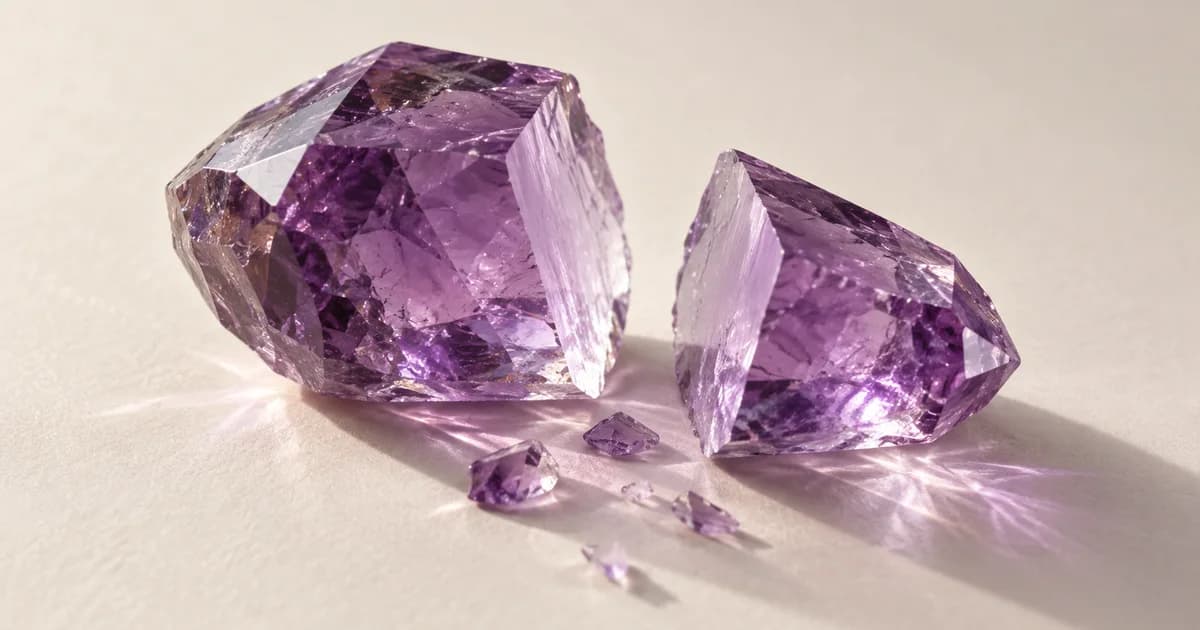
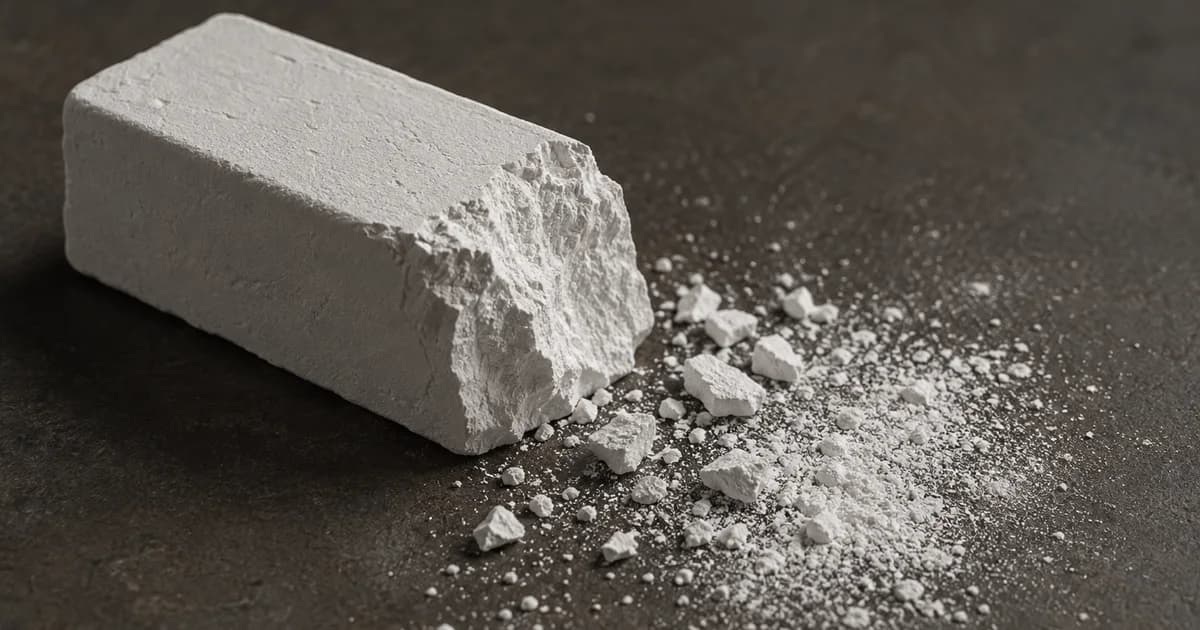
Chalk draws attention to what remains
With chalk, a worn patch can invite the next press. The remaining surface changes as corners chip and crumbs gather. Waiting only for the final collapse misses that quieter progression. Powder is not simply a larger number of miniature gemstones. Individual fragments have readable edges; fine powder is often perceived as a patch with density and a softer boundary. You can look for that distinction without trying to count every particle.
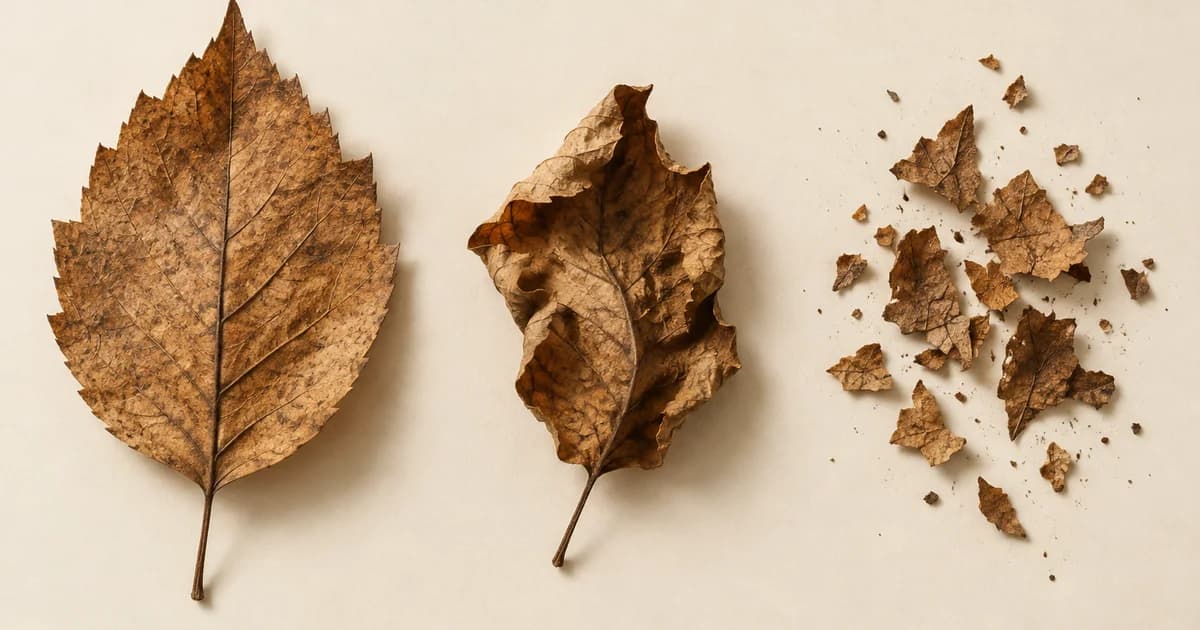
A leaf has a folding interval
A broad leaf surface turns inward before it becomes scattered crumbs. The fold is not merely a delay before the exciting part. It is much of what makes the object read as thin and leaf-like. Replace it with an immediate spray of chunky pieces and the outline alone may not preserve the impression.
Gem leaves deliberately combine unlike ideas: jewel-like color with dry-leaf motion and recordings. They are not a claim that actual mineral ornaments fold like paper. Knowing where the fantasy begins lets you enjoy the combination without treating it as a material simulation.
Separate what looks good from what sounds good
A bright flash may suggest a crisp sound, while powder may suggest something softer. Your preference need not follow that expectation. You may want quiet audio beneath a dramatic Gem, or a clear ending when chalk finally gives way. Try watching one short action muted, then enable sound at low volume. If the picture appeals and the sound does not, you do not need to tolerate it for the sake of realism.
Compare endings rather than peaks
Comparing only the loudest event turns the exercise into a contest of intensity. Instead, notice what follows the main action: another small contact, a grainy tail, or thin rustling between breaks. These are listening prompts, not a formal classification of every sample. Leave enough room for the ending to become apparent, but do not turn up the volume until quiet details are uncomfortable to pursue. Missing a tiny sound does not invalidate the experience.
A completed action is not an empty screen
Two cut pieces can be an ending or an invitation to cut again. Chalk can remain partly intact after you have seen enough. A fresh leaf appearing is preparation for another gesture, not proof that the last one is unfinished. Comparing modes by the same click count ignores those differences. You can stop at the state you like rather than at the maximum possible destruction.
Stillness may reveal material better than a busy breakup. A flat crystal face, the boundary of a powder patch, and a thin leaf fragment become easier to notice when movement has settled. If that quiet state is your favorite, there is no need to chase a bigger collapse.
A small comparison you can try
First, move a Gem into a gentle contact in Playground and watch what follows. Then make a few presses on chalk, noticing the surface rather than rushing to finish it. Finally, briefly press a leaf and hold another a little longer before releasing. If the act of cutting interests you, open Cutting separately and draw one line. This is not an ordered ranking. Stop with the material you enjoy; a menu of choices is not a checklist.
Keep the real-world boundary clear
These illustrations are created to discuss texture; they are not laboratory photographs or screenshots. The article does not recommend crushing hard objects or breathing real chalk dust to reproduce a virtual scene. The research linked below discusses ASMR experiences, not a health ranking of Gems, chalk and leaves. If listening becomes unpleasant, lower the volume or stop. Leaving the screen remains an available choice.